
"global coffee growing"
3000 article(s) found

2017 Kangfu special beverage seminar and Cascata180 nitrogen cold drink system conference
(Shanghai, China, May 6, 2017) on May 5th, the 2017 Kangfu Greater China Beverage Seminar and Cascata 180 nitrogen Cold Beverage system Conference hosted by Hong Fu China was held at the JW Marriott Hotel in Shanghai. Different market research reports from Kangfu Global and Asia-Pacific region show that China's beverage market will show blowout growth in 2017, based on the rapid growth of the industry.

Climate change threatens global coffee supply to wild coffee or extinction
The Australian non-profit Climate Research Institute (Climate Insititue) released a report this month warning that climate change will seriously endanger coffee supplies around the world. The report, entitled Storm in the making, details the impact of climate change on coffee farms and predicts future coffee supplies. The study predicts that temperatures will continue to rise by 2050.

To what extent has coffee cultivation in China developed?
Following Cafe Review (Wechat official account vdailycom) found that Coffee Cafe opened a small shop of its own. Coffee is one of the most popular drinks in the world today, with global consumption of more than 1.5 billion cups a day. To meet the global demand for coffee, 25 million farmers in more than 80 countries are engaged in coffee cultivation. At present, the global annual output of coffee exceeds 8 million tons, making it the heaviest in the world.

2017 the degree of development of coffee cultivation in China
Following Cafe Review (Wechat official account vdailycom) found that Coffee Cafe opened a small shop of its own. Coffee is one of the most popular drinks in the world today, with global consumption of more than 1.5 billion cups a day. To meet the global demand for coffee, 25 million farmers in more than 80 countries are engaged in coffee cultivation. At present, the global annual output of coffee exceeds 8 million tons, making it the heaviest in the world.

Luckin Coffee was selected as China's TOP10 on the list of Global Innovation Enterprises.
Professional coffee knowledge exchange more coffee bean information please follow Coffee Workshop (Wechat official account cafe_style) on February 20th, the well-known American business magazine "Fast Company" (Express) released the 2019 list of the world's most innovative companies. Luckin Coffee, who has been in operation for one year, was selected as China's most innovative company in TOP 10, becoming the fastest on the list. In "Fast Compa"

Global coffee producing area-Costa Rica
Coffee was introduced into Costarica from Cuba in 1729. Today, its coffee industry is one of the most well-organized industries in the world.
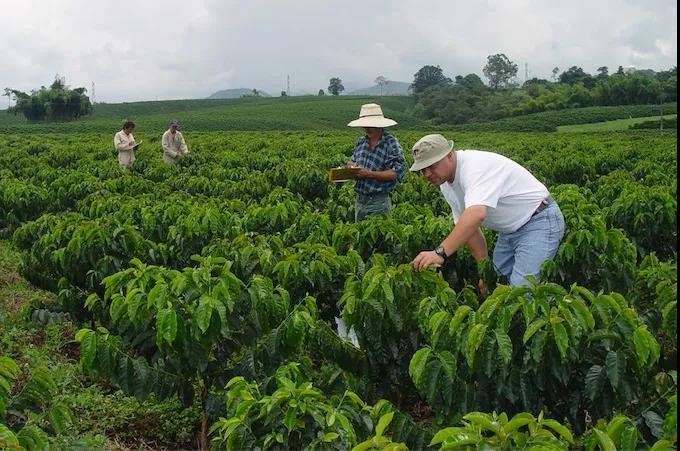
Will the rise in temperature caused by global warming affect the yield and quality of coffee beans in Colombia?
Professional coffee knowledge exchange more coffee bean information Please follow the coffee workshop (Wechat official account cafe_style) with global warming, Colombia, as the world's third largest coffee producer, will face the challenge of climate change. According to a study by the University of Illinois in the United States, coffee may no longer be grown in the low-altitude areas of Colombia. Coffee is widely grown in Colombia

Global coffee production Zaire coffee production
High quality coffee from Zaire is dwindling, but the taste of Zaire coffee is still excellent. Coffee production in Zaire: The best Zairian coffee is grown in the north-east of the country, particularly in the provinces of Oriental and Kivu, and these areas used to produce the best bean-berry coffee beans and giant coffee beans. Zaire Minor

Global Coffee producing area-Cameroon Coffee Market
The cultivation of Arabica coffee trees in Cameroon (Cameroon) began in 1913 as the Blue Mountain Coffee from Jamaica, but the country also produces large quantities of Robbins coffee. Coffee production in Cameroon: the best coffee in Cameroon comes from Bamileke and Bamoun in the northwest. In addition, it also grows some giant coffee beans and bean-shaped berry coffee.

Global coffee production-Zaire
High quality coffee from Zaire is dwindling, but the taste of Zaire coffee is still excellent. Coffee production in Zaire: The best Zairian coffee is grown in the north-east of the country, particularly in the provinces of Oriental and Kivu, and these areas used to produce the best bean-berry coffee beans and giant coffee beans. Zaire Minor

Global Coffee producing area-Haitian Coffee Market
Despite well-known problems and fluctuating coffee quality, Haiti (Haiti) is still trying to produce some high-quality coffee. Coffee producing area in Haiti: the main coffee growing area in Haiti is in the north of the country. Most of the coffee produced in Haiti is grown in a purely natural state, which is not intentional but the result of material shortage.

Global coffee producing area-Suriname boutique coffee beans
Suriname (Surinam) was the first country in South America to grow coffee. The Dutch who settled in Suriname in 1667 introduced coffee trees from Java in the early 18th century. The first coffee trees were given by the mayor of Amsterdam to a Flemish pirate, a Hansback. To be exact, these coffee trees were planted in the Dutch Gui at that time.

Global coffee producing area-Suriname coffee market
Suriname (Surinam) was the first country in South America to grow coffee. The Dutch who settled in Suriname in 1667 introduced coffee trees from Java in the early 18th century. The first coffee trees were given by the mayor of Amsterdam to a Flemish pirate, a Hansback. To be exact, these coffee trees were planted in the Dutch Gui at that time.

Characteristics of Suriname Coffee from Global Coffee producing area
Suriname (Surinam) was the first country in South America to grow coffee. The Dutch who settled in Suriname in 1667 introduced coffee trees from Java in the early 18th century. The first coffee trees were given by the mayor of Amsterdam to a Flemish pirate, a Hansback. To be exact, these coffee trees were planted in the Dutch Gui at that time.

Global Coffee producing area in Haiti
Despite well-known problems and fluctuating coffee quality, Haiti (Haiti) is still trying to produce some high-quality coffee. Coffee producing area in Haiti: the main coffee growing area in Haiti is in the north of the country. Most of the coffee produced in Haiti is grown in a purely natural state, which is not intentional but the result of material shortage.

Global coffee producing area-Zimbabwe
Coffee cultivation in Zimbabwe began relatively recently, in the 1960s, when farmers in southern Africa set up coffee plantations. Coffee production in Zimbabwe: coffee cultivation in Zimbabwe is mainly concentrated in the eastern highlands near Mozambique, mainly in the Chimanimani Mountains and northward in Niyan.

Global Coffee producing area in Zimbabwe
Coffee cultivation in Zimbabwe began relatively recently, in the 1960s, when farmers in southern Africa set up coffee plantations. Coffee production in Zimbabwe: coffee cultivation in Zimbabwe is mainly concentrated in the eastern highlands near Mozambique, mainly in the Chimanimani Mountains and northward in Niyan.

A global coffee producer in South Africa.
The country's coffee trees originated in Kenya and are of excellent quality. Only 1000 hectares of arable land was used to grow coffee trees in 1975, but a new nine-year plan was developed in 1987 to expand the area of arable land, resulting in an additional 6000 hectares of arable land. Coffee production in South Africa: coffee production in South Africa (SouthAfrica) is mainly concentrated in the northeast of the country, by Lesotho (Lesotho) and Mozambique

Global coffee producing area-Zimbabwe
Coffee cultivation in Zimbabwe began relatively recently, in the 1960s, when farmers in southern Africa set up coffee plantations. Coffee production in Zimbabwe: coffee cultivation in Zimbabwe is mainly concentrated in the eastern highlands near Mozambique, mainly in the Chimanimani Mountains and northward in Niyan.
Suriname, a global coffee producer
Suriname (Surinam) was the first country in South America to grow coffee. The Dutch who settled in Suriname in 1667 introduced coffee trees from Java in the early 18th century. The first coffee trees were given by the mayor of Amsterdam to a Flemish pirate, a Hansback. To be exact, these coffee trees were planted in the Dutch Gui at that time.